 raft
With AI, humans stay responsible for what they produce
At the end of October, at one of our clients, a member of the leadership team posted this message to the whole company.
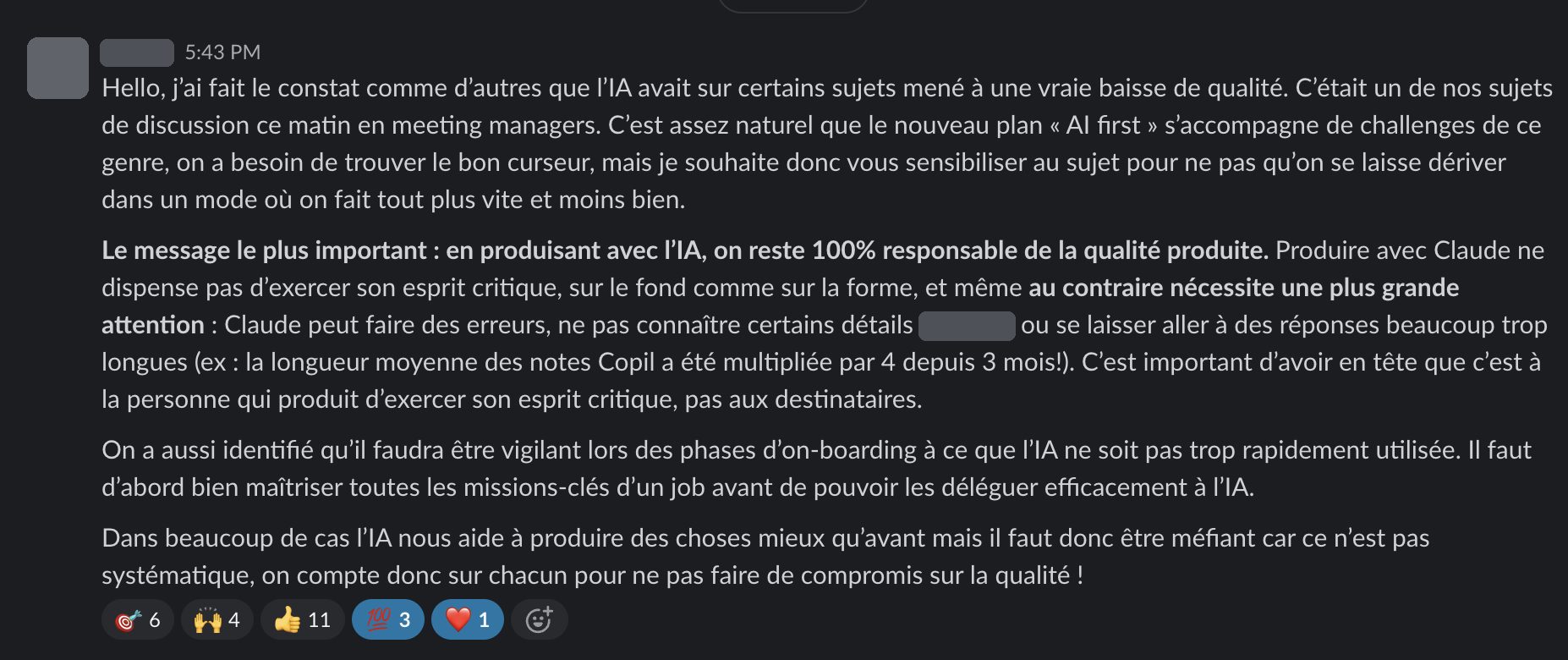
The company had just launched an "AI first" plan, and on some topics, quality had dropped, enough for it to come up in the managers' meeting. One figure sums it up: the average length of steering committee notes had been multiplied by 4 in 3 months.
I shared it with the Qraft team the next morning, because I think it concerns all of us, with my own take:
On my side, there's no way I'm spending more time reading AI-generated things that are 10,000-word slop when the author could have made it simpler / shorter / more relevant. Writing is easy, reading is hard, the work has to be done on the author's side.
When I code
It's the same with code. Claude Code writes a good part of what I ship: the code, the PRs, the issues. But it's my name on it.
The same week, I asked Claude to open an issue about a CI bug. Its first version was 304 words. All of it was correct, but it was too long. I answered "Plus simple" (simpler), and the second one is 122 words. Now I understand what it does, and so do my colleagues.
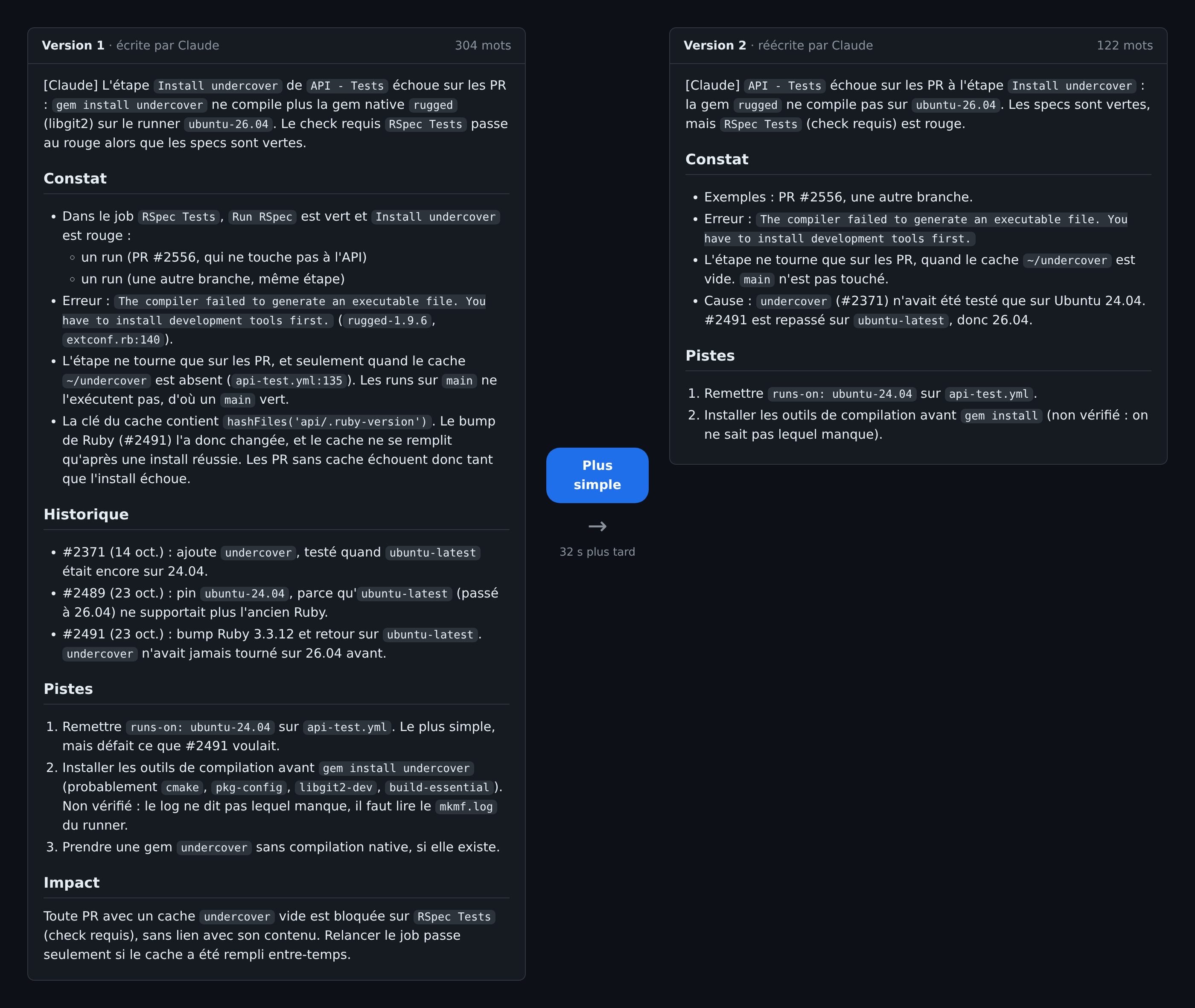
That's my job: read, challenge, ask for simpler or more precise, and set the direction. Claude writes, I sign.
This article was co-written with Claude too. That's the whole point: I'm the author. If it's bad, it's my fault, and if it's good, too.